Choosing you child’s first instrument
Choosing your child’s first instrument gets easier when you start with your child’s personality, sound preferences, and daily routine, then match those to an instrument and teacher that make home practice feel doable. This research-informed checklist will help you make a confident, low-stress choice that fits your real life.
Reading Time: 5 minutes
Start with your child, not the instrument
Many children choose an instrument because they like the sound, they want to play with friends, or they are influenced by family. Research on instrument choice also finds that encouragement from parents, liking an instrument’s sound, and getting a chance to try it for fun are common reasons people choose what they play.
If your child lights up when they hear a certain sound, follow that spark first. If your child is more cautious, choose the instrument that gives quick “I can do it” moments, because confidence is fuel for consistency.
What each first instrument makes easier
Piano is a strong “map of music” instrument because notes are laid out clearly, and many beginners can make a pleasant sound quickly with good guidance. Guitar and ukulele are great for children who love songs and rhythm, and they are often motivated because students can play simple patterns that feel like “real music” early on.
Voice can be a powerful first instrument for expressive kids, and it builds musicianship that supports every other instrument later. If your child mainly wants community and connection, choose an option that includes both individual support and a group element, since collaboration and belonging can keep motivation steady.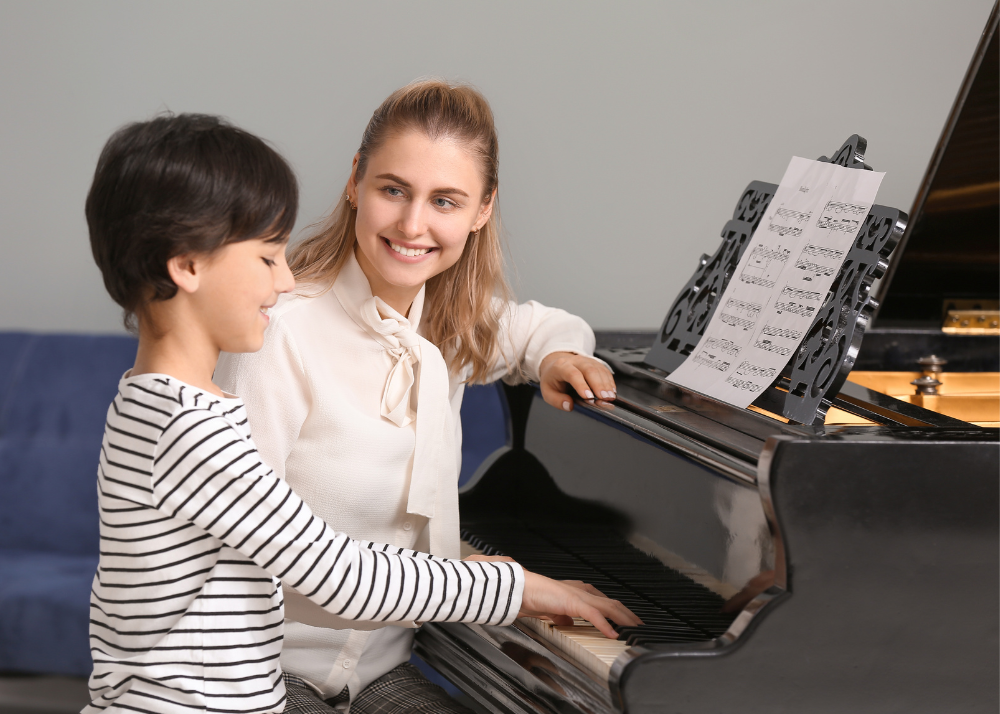
A simple checklist for a confident choice
Use this short checklist to make the decision feel calmer and more objective, especially if you are a busy parent balancing many activities.
- Sound preference: Ask, “Which sound makes you want to listen again?” and let your child pick from two or three options.
- Fit and comfort: The instrument should feel comfortable to hold and use, because physical factors can influence instrument choice and follow-through.
- Home routine: Pick the instrument you can support with a small, repeatable practice time, since consistent support matters more than long practice sessions.
- Learning style: Some children want structure and clear steps, while others want creative exploration, so choose a teacher and program style that matches your child.
- Social needs: If your child thrives with peers, choose a path that includes ensemble opportunities, not only solo learning.
One AGMS story we keep close is a young beginner who arrived shy and unsure, then grew into a confident participant over time through patient pacing, encouraging feedback, and a safe learning space. That kind of transformation is what a well-matched first instrument can begin.
Ready for help choosing an instrument?
If you would like a teacher to gently guide your child through trying piano, guitar, ukulele, or voice, we would love to meet you at Avant-Garde Music Studio in Royal Oak during Open House Week. At your child’s first class we listen to their interests, notice how they learn, and recommend whether the instrument they tried fits both their personality and your family’s weekly routine. Click here to book your spot during Open House Week, and let us help your child take a confident first step into music
Want to learn more?
If you’re the kind of parent who likes to see what the research says, here are a few great starting points we used while writing this guide.
- How kids (and families) choose instruments (sound, friends, family influence): Why They Choose: Understanding the Instrument Selection Choices of My Own Elementary School String Students (Rotjan, 2017).
https://digitalcommons.lib.uconn.edu/cgi/viewcontent.cgi?article=1177&context=vrmedigitalcommons.lib.uconn - What tends to drive instrument choice (timbre/sound, parental influence, “try-it” sessions, etc.): Why did you (not) choose your main musical instrument? Exploring the motivation behind the choice (British Journal of Music Education, 2024).
https://www.cambridge.org/core/journals/british-journal-of-music-education/article/why-did-you-not-choose-your-main-musical-instrument-exploring-the-motivation-behind-the-choice/2E560BDA56170D84C790E8591A5FAFC3cambridge - Music lessons and executive function (skills like self-control and flexible thinking): Boosting executive function in children aged 3–12 through musical training: a three-level meta-analysis (Frontiers in Psychology, 2025).
https://www.frontiersin.org/journals/psychology/articles/10.3389/fpsyg.2025.1659927/fullfrontiersin